

What Are Heavy Duty Doors?
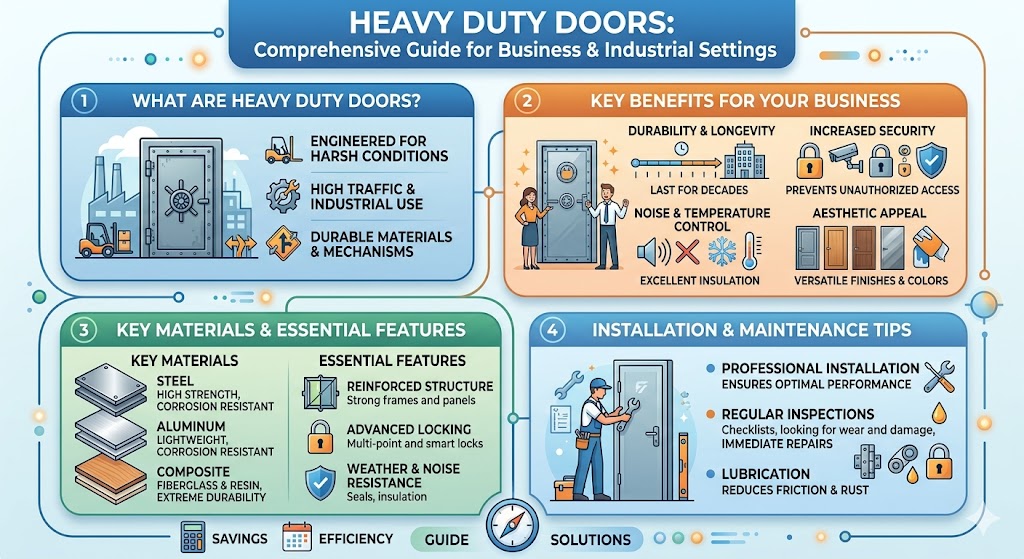
Heavy duty doors are specifically designed to withstand extreme conditions that regular doors cannot endure. These robust doors are built for environments that experience high traffic, large machinery, or harsh weather conditions. Whether in warehouses, factories, or high-security facilities, heavy duty doors are essential for safety, efficiency, and durability.
They are typically made from strong materials such as steel, aluminum, or reinforced composite materials, which provide superior resistance to impact, weather, and wear over time. Unlike standard doors, which may be sufficient for lighter-duty environments, heavy duty doors are designed to handle substantial physical stress, ensuring long-term functionality and minimal maintenance.
Why Heavy Duty Doors Are Important for Your Business
Investing in heavy duty doors for your business can provide numerous benefits that enhance both the safety and efficiency of your operations. Here are some key reasons why you should consider upgrading to heavy duty doors:
1. Durability and Longevity
Heavy duty doors are engineered to last for decades, even under harsh conditions. Unlike standard doors, which may wear out quickly in high-traffic areas or adverse environments, these doors are designed to endure and provide long-lasting performance. This makes them a worthwhile investment for businesses that need reliable solutions.
2. Increased Security
Heavy duty doors offer superior protection against forced entry and unauthorized access. They are often equipped with advanced locking mechanisms and reinforced materials that prevent break-ins. Whether you operate in a high-security industry or simply want to safeguard your property, these doors help deter criminals and keep your premises secure.
3. Noise and Temperature Control
In commercial or industrial settings, controlling noise and temperature is often crucial for employee comfort and operational efficiency. Heavy duty doors can provide excellent sound insulation, minimizing the noise coming from production areas. Additionally, they offer enhanced thermal insulation, helping to maintain a comfortable temperature inside the building while reducing energy costs.
4. Enhanced Aesthetic Appeal
A business’s physical appearance plays a significant role in creating a positive first impression. Heavy duty doors are available in a variety of finishes, styles, and colors that can complement your building’s design and elevate its aesthetic appeal. Whether you want a modern, industrial look or a more traditional design, there’s a heavy duty door solution to suit your needs.
Key Materials Used in Heavy Duty Doors
Heavy duty doors are typically constructed from high-strength materials that are engineered to withstand extreme environmental conditions. Here are some common materials used in the production of heavy duty doors:
1. Steel
Steel is one of the most popular materials for heavy duty doors due to its strength, durability, and resistance to impact and corrosion. It is commonly used in high-security areas where protection from intruders and harsh elements is essential. Steel doors also provide excellent thermal and sound insulation properties.
2. Aluminum
Aluminum doors are lighter than steel but still offer significant strength and resistance to corrosion. They are often used in environments where weight is a concern, such as for automated systems. Aluminum doors are also highly customizable, allowing for a range of finishes and designs.
3. Composite Materials
Composite materials combine the best attributes of various substances, such as fiberglass, resin, and plastic, to create doors that are highly durable, weather-resistant, and lightweight. These materials are ideal for situations where extreme durability and low maintenance are required, such as in corrosive or extreme weather environments.
Essential Features of Heavy Duty Doors
When selecting a heavy duty door for your business, there are several essential features to consider. Here are some key attributes that make these doors more effective and reliable:
1. Reinforced Structure
A reinforced structure ensures that the door can withstand high impact and heavy loads. This is particularly important for doors in high-traffic areas or environments with large equipment and machinery. Reinforced frames and panels help the door maintain its integrity over time.
2. Advanced Locking Mechanisms
Security is a top priority for many businesses, and heavy duty doors are equipped with advanced locking mechanisms to provide maximum protection. This includes multi-point locking systems, electronic keypads, and biometric access control features that make unauthorized access difficult.
3. Customizable Sizes and Designs
Heavy duty doors are available in a wide range of sizes and designs to accommodate different building layouts and aesthetic preferences. Customization options allow businesses to choose doors that fit perfectly within their operational space and enhance their overall appearance.
4. Weather and Noise Resistance
For businesses operating in extreme weather conditions, such as rain, wind, or heat, weather-resistant doors are crucial. Heavy duty doors can be designed with insulated cores, weatherstripping, and special coatings to prevent heat loss, water infiltration, and drafts. In addition, they offer soundproofing capabilities to reduce noise pollution from the surrounding environment.
Installation and Maintenance Tips
Proper installation and regular maintenance are essential to ensuring that your heavy duty doors function effectively for years to come. Here are some tips to help with installation and care:
1. Professional Installation
For optimal performance, it’s important to have heavy duty doors professionally installed. An expert installer will ensure that the door is fitted correctly, with all necessary seals, locking mechanisms, and reinforcement components in place. Improper installation can lead to issues with functionality and security.
2. Regular Inspections
Regular inspections are key to maintaining the integrity of heavy duty doors. Look for signs of wear, rust, or damage to the frame, hardware, and seals. If any components are worn out, replace them immediately to avoid further damage or security breaches.
3. Lubrication
To ensure smooth operation, lubricate the door’s moving parts, such as hinges, rollers, and locks, regularly. This helps reduce friction, prevent rust, and extend the lifespan of the door.
Conclusion
Heavy duty doors are an essential investment for businesses that require reliable, durable, and secure entrances. They provide numerous advantages, including increased security, energy efficiency, noise reduction, and long-term durability. Whether you are looking to enhance safety or improve your building’s aesthetic appeal, heavy duty doors are a smart choice.
Frequently Asked Questions
What materials are heavy duty doors made from?
Heavy duty doors are typically made from durable materials like steel, aluminum, and composite materials. These materials provide superior strength, corrosion resistance, and weatherproofing, making them ideal for industrial and commercial environments.
How long do heavy duty doors last?
With proper installation and regular maintenance, heavy duty doors can last for several decades. Their durability is one of the main reasons they are favored for high-traffic or high-security applications.
Are heavy duty doors customizable?
Yes, heavy duty doors can be customized in terms of size, design, and features. You can choose the materials, colors, finishes, and additional security options to meet the specific needs of your business or facility.
How do I maintain heavy duty doors?
Regular maintenance includes inspecting for wear and tear, lubricating moving parts, cleaning the door, and replacing any damaged components. Keeping the door properly sealed and reinforced ensures its continued performance and security.