

Introduction to Heavy Duty Doors
Heavy Duty Doors are specially designed to withstand high traffic, extreme environmental conditions, and offer superior durability. These doors are typically found in commercial and industrial settings, where regular wear and tear can be a concern. They are engineered to handle greater loads, provide excellent security, and ensure safety in high-traffic areas. In this article, we will explore the features, types, installation, and maintenance of heavy-duty doors to help you make informed decisions for your business or facility.
Common Uses of Heavy Duty Doors
Heavy duty doors are used in a variety of industries and environments where standard doors are not sufficient. These include:
- Factories and Manufacturing Plants: These doors are ideal for large warehouses, factories, and manufacturing plants where equipment and machinery need to pass through securely.
- Shipping and Distribution Centers: Heavy duty doors are used for loading docks, ensuring easy access for large trucks and cargo.
- Storage Facilities: In storage facilities, especially those housing sensitive or valuable goods, heavy-duty doors provide an extra layer of security and insulation.
- Retail and Commercial Buildings: They are also used in high-traffic commercial buildings, such as malls and supermarkets, where security and durability are essential.
- Cold Storage Facilities: Cold storage environments, including refrigerators and freezers, require heavy-duty doors to maintain temperature control while ensuring security.
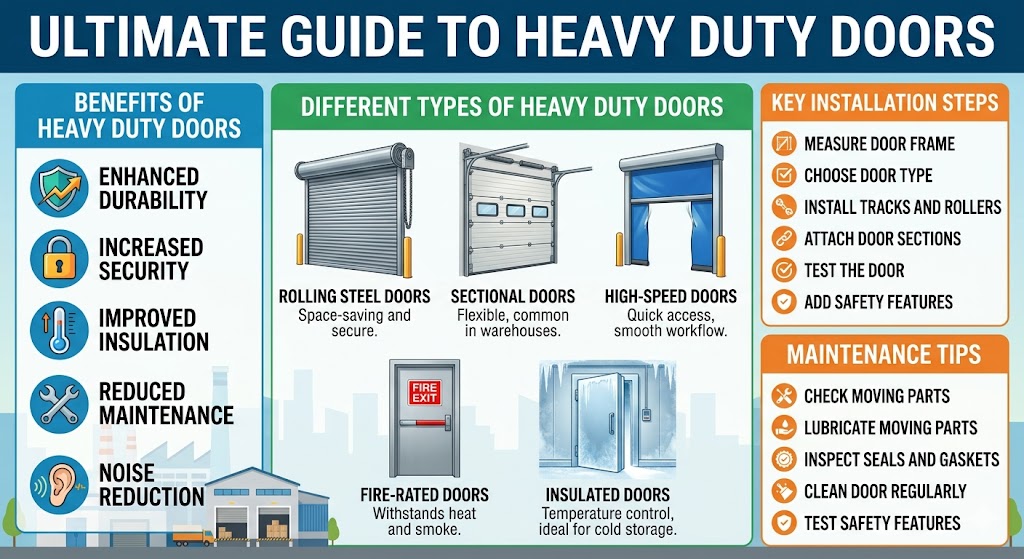
Benefits of Heavy Duty Doors
Investing in heavy-duty doors offers several significant advantages for commercial, industrial, and residential spaces:
- Enhanced Durability: Heavy-duty doors are made from materials that resist wear and tear, ensuring they last longer even with high-frequency use.
- Increased Security: These doors are often designed with high-grade locks, reinforced frames, and durable materials to provide maximum security for your property.
- Improved Insulation: Some heavy-duty doors are designed to provide insulation, making them perfect for environments that require temperature control, such as cold storage facilities.
- Reduced Maintenance: With durable construction, heavy-duty doors require less frequent maintenance, saving time and money in the long run.
- Noise Reduction: In industrial settings, heavy-duty doors can help reduce noise pollution by providing an effective barrier between noisy machinery and work areas.
Different Types of Heavy Duty Doors
There are various types of heavy-duty doors designed to meet specific needs. The following are the most common types you will encounter:
1. Rolling Steel Doors
Rolling steel doors are perfect for commercial and industrial spaces where space-saving and security are critical. These doors roll up into a coil, saving valuable space while offering a high level of durability and resistance to impacts.
2. Sectional Doors
Sectional doors are made of several sections that slide up and overhead, offering both security and flexibility. They are commonly used in garages, warehouses, and loading docks.
3. High-Speed Doors
High-speed doors are designed for areas where quick access is essential. These doors open and close rapidly, reducing wait times and ensuring smooth workflow in high-traffic areas.
4. Fire-Rated Doors
Fire-rated doors are built to withstand heat and smoke for a certain period. They are commonly used in buildings where fire safety is a priority, such as in industrial facilities and commercial buildings.
5. Insulated Doors
Insulated heavy-duty doors are designed to maintain temperature control in environments like cold storage units or manufacturing areas where temperature stability is critical.
How to Install Heavy Duty Doors
Installing a heavy-duty door is a process that requires careful planning and attention to detail. Here's a general overview of the installation process:
- Step 1: Measure the Door Frame – Accurate measurements are essential to ensure the door fits perfectly within the frame.
- Step 2: Choose the Right Door Type – Select the appropriate heavy-duty door based on your needs (e.g., fire-rated, insulated, sectional, etc.).
- Step 3: Install the Tracks and Rollers – Proper installation of tracks and rollers is crucial for smooth door operation.
- Step 4: Attach the Door Sections – Depending on the door type, you will either assemble sections or install a single piece door.
- Step 5: Test the Door – Once installed, test the door to ensure it opens and closes smoothly without any issues.
- Step 6: Add Safety Features – Ensure that safety mechanisms such as sensors or automatic stops are installed to prevent accidents.
Maintenance Tips for Heavy Duty Doors
Maintaining your heavy-duty doors is crucial to ensure they continue to function efficiently and last for many years. Here are some key maintenance tips:
- Regularly check the door's moving parts, such as tracks, rollers, and hinges, for any signs of wear and tear.
- Lubricate the door's moving parts every 6 months to reduce friction and prevent damage.
- Inspect the seals and gaskets for any damage and replace them as needed to ensure proper insulation and security.
- Clean the door regularly to prevent dirt buildup, which can affect its operation.
- Test the door's safety features periodically to ensure they are working correctly.
Frequently Asked Questions
Q1: What are the main types of heavy duty doors?
The main types of heavy-duty doors include rolling steel doors, sectional doors, high-speed doors, fire-rated doors, and insulated doors. Each type serves a specific function depending on the environment and needs of the user.
Q2: How do I choose the right heavy duty door for my business?
Choosing the right heavy-duty door depends on several factors, including the level of security required, insulation needs, the volume of traffic, and whether the door needs to withstand specific environmental conditions (e.g., extreme temperatures or fire hazards).
Q3: How often should I maintain my heavy duty door?
It’s recommended to inspect and maintain your heavy-duty door at least once every 6 months. Regular checks and lubrication can help prevent costly repairs and ensure that your door operates smoothly for years to come.
Q4: Can heavy duty doors be customized?
Yes, heavy-duty doors can often be customized to fit specific needs. This includes selecting materials, sizes, finishes, and additional security features like advanced locking systems or fire-resistant coatings.